"The HPC has been repealed. I don't really have much to say." Southport Fire Chief Charles Drew chaired the city's Historic Preservation Commission, and that was his whole comment to The State Port Pilot after the Board of Aldermen dissolved it in August.
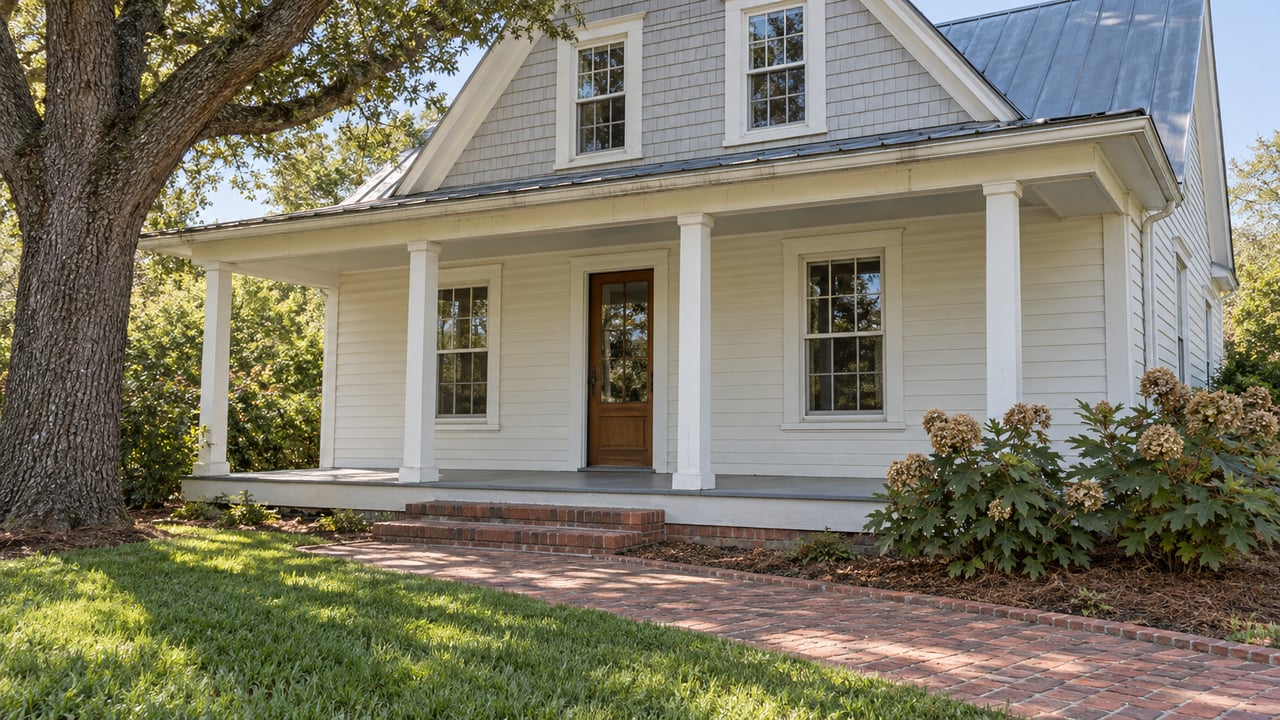
The repeal changes what a Southport historic home includes. A buyer who tours a Victorian on a shaded street near the river is buying the house. The buyer is also buying an assumption about the houses around it. As of this fall, no public body in Southport reviews how those neighboring houses look, and state law now bars the city from creating one. Protecting the old town's character has moved from city hall to each individual owner.
What the "historic district" label actually covers
The Southport Historic District is real and well established. The City of Southport says it was surveyed in the late 1970s and listed on the National Register of Historic Places in 1980. It covers commercial, government and religious buildings, parks, a cemetery, and private homes. The city's own historic designation FAQ calls National Register listing "mostly honorary." It says the listing gives some protection against harm from federally or state-funded projects.
National Register listing does not control what a private owner does to a private house. That job falls to a local historic district, and Southport never adopted one. The same FAQ page still describes a local district as "being proposed." It also still describes rules that would have applied if that district had passed. Anyone reading the page to understand a purchase can easily get a picture that is now out of date.
| What the city FAQ page still says | Where things stand this fall |
|---|---|
| Any exterior work in the local district needs a Certificate of Appropriateness | The local district was never adopted, and the commission that would have issued certificates was repealed August 13, 2026 |
| Demolition needs a certificate and can be delayed up to 365 days | That delay ran through the commission, which no longer exists |
| A local district "is being proposed" | State law now bars Southport from creating new historic districts or overlays |
How design review ended before it started
The city created the Historic Preservation Commission by ordinance in 2022, and the commission met every month from September of that year. Its main project was a 100-page set of standards spelling out what historic homeowners could change. Port City Daily reported that some historic homeowners pushed back hard, comparing the rules to an HOA. One group threatened to sue if the district passed.
The aldermen held a public hearing on June 2 on an overlay covering 386 parcels. WECT reported that it would have included properties along Bay, Moore, Nash, West and West Brown streets, the commercial core, and most of the original 100 lots. It also would have required a Certificate of Appropriateness before owners made changes. WECT said critics argued the rules could label some historic homes nonconforming and make them harder to sell or finance. Supporters said the guidelines were needed to keep out incompatible new development.
The General Assembly settled it first. Senate Bill 876 was ratified July 2. Its Part XIII abolished the commission and bars Southport from creating a new one, creating any new historic district or overlay, or expanding an existing one. Districts already in effect may stay but cannot grow. On August 13 the aldermen passed the repeal as part of the consent agenda, unanimously and with no discussion. The city code lists it as Ordinance 26-0813.01, adopted to conform with Session Law 2026-25.
A softer option came up and then stopped. In July, Alderman Karen Mosteller proposed a Historic Preservation Appearance Commission that would give nonbinding advice, with no certificate requirement and no enforcement power. WWAY reported that the board took no vote on it on July 9 and agreed to keep talking. The State Port Pilot noted that no one mentioned the proposal at the August meeting and that nothing showed it would return.
What still governs the house next door
With historic review gone, what's left is the ordinary zoning code, and it controls more than some buyers expect. The city's Unified Development Ordinance includes building design standards for the CBD and BD districts. The UDO's dimensional table sets a 40-foot height limit in both districts, with zero front and side setbacks. Those rules limit size and placement. They do not cover siding, windows, porches or rooflines on most houses.
Trees are covered by their own rules. On platted residential lots and one- and two-family properties, the UDO requires a tree removal permit for any regulated tree in a setback and for a specimen tree anywhere on the property. Removals have to be replaced with new plantings, and live oaks get special treatment:
Where regulated or specimen Live Oak (Quercus virginiana) trees are removed, the replanting requirement shall consist of a minimum of 50% such species.
For one- and two-family homes, the replanting must equal 25% of the total trunk diameter removed, measured at breast height. In practice, the canopy over an old-town street has more formal protection right now than the facades under it.
The one reward still available
Taking away the requirements left the incentives untouched, and the main one is worth real money. North Carolina's owner-occupied rehabilitation program offers a 15% state tax credit for qualifying work on buildings listed individually on the National Register or counted as contributing buildings in a National Register district. Southport's 1980 district qualifies for that. The City FAQ also says homeowners with contributing properties may be eligible.
According to the NC State Historic Preservation Office, the program works like this:
- Rehabilitation spending must be more than $10,000 within a 24-month period.
- Eligible expenses are capped at $150,000, so the largest possible credit is $22,500.
- An owner can claim one project every five years.
- All work must meet the Secretary of the Interior's Standards for Rehabilitation, and the State Historic Preservation Office reviews every project for compliance.
- The credit cannot be applied to purchase price, new additions that add volume, site work, or personal property.
The office's own example is $100,000 of rehabilitation producing a $15,000 credit. It strongly advises owners to consult the office before starting work, because design problems can lead to the credit being denied. The timing of a sale matters too: credits can pass to a new owner only if the property changes hands before the rehabilitated building is placed in service.
The federal 20% rehabilitation credit is a separate program. The National Park Service limits it to income-producing buildings, so owner-occupied homes do not qualify. The Park Service also notes that not every building inside a National Register district counts as contributing. Two houses on the same street can therefore have different access to the state credit. The city's interactive district map shows whether a property sits inside the district boundaries.
This is a different kind of system than the one Southport debated. The rules that would have bound every owner are gone. The credit asks for the same discipline, meeting the Secretary of the Interior's Standards, but only from owners who opt in.
Protection now happens one house at a time
Preservation North Carolina responded to the bill with a statement from President and CEO Benjamin Briggs, illustrated with the Guthrie-Parkhill House, an 1886 Southport home the organization lists as a protected property. The statement pointed owners to the group's statewide easement program as a way to protect a property permanently. According to Preservation North Carolina's easement guidance, an owner can voluntarily grant a preservation easement that limits inappropriate alterations, additions, or demolition.
That is now the strongest tool left, and it works one deed at a time. An easement binds the house it is recorded on, and a buyer looking at the house next door will find it only by checking the title records.
Private investment keeps going without a commission. In October, the StarNews covered the reopening of the Amuzu Theatre at 111 N. Howe St. after a major renovation of a building that had been in varying states of disrepair for more than four decades. Owners who choose to invest in the old town's character are still doing so. They just aren't required to.
Before writing an offer on an old-town house
The old town's character now depends on a few hundred separate decisions, so a careful buyer looks at the block as well as the house:
- Check the property on the city's district map, and find out whether the building is counted as contributing. That determines whether the 15% state credit is available at all.
- Ask the seller whether a preservation easement or private covenant is recorded on the property. Ask the same about neighboring lots if their character matters to you.
- Look up the zoning district. CBD and BD properties have height, setback and design standards that other areas may not.
- Before planning any site work, count the setback trees and specimen trees. Live oak removals bring a replanting requirement.
- If you're planning a renovation with the credit in mind, contact the State Historic Preservation Office before closing so the design and timing questions are answered while the price can still reflect them.
This post is general information about public rules, not legal, tax or financial advice. Please confirm how any rule or credit applies to your property with a qualified attorney, tax advisor or the agency involved.
Suzanne O'Bryant is glad to walk through a specific Southport historic home with you, including its zoning, its trees and its standing in the National Register district, before you make an offer.