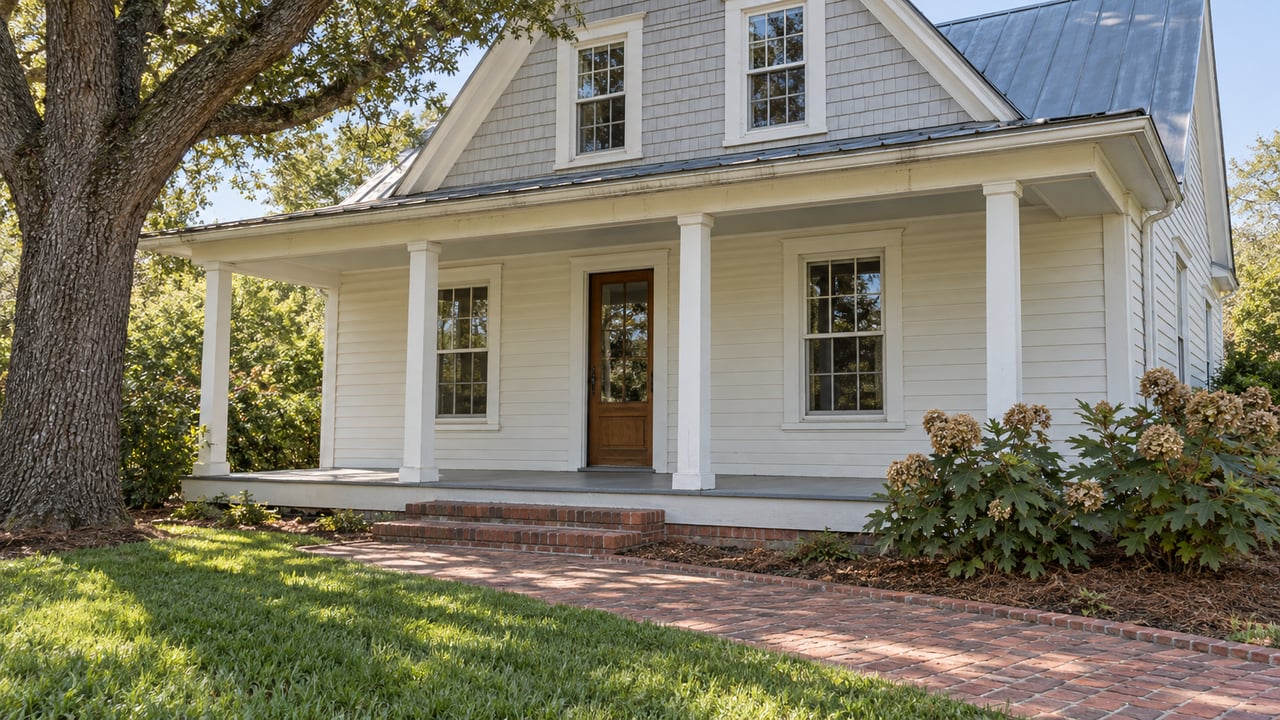
On March 12, 2026, the Wilmington Historic Preservation Commission opened an evidentiary hearing for 226 South Front Street, a property sitting in the Commercial Business District-Historic District Overlay. The owner, an entity called Captain John Enterprises, wanted approval for a major rehabilitation and a rear addition. City planner Benjamin Riggle's staff report noted something worth sitting with: this same house had faced two separate requests to demolish it, one in 2008 and another in 2014. Neither went through. The house survived, got a certificate for exterior alterations and a rear addition in 2024, and by this spring was back in front of the commission for more.
That single address tells you more about how the Historic District actually prices than any headline figure will. According to the City of Wilmington, every exterior change here, from a new roofline to replacement windows to a fence, has to clear a Certificate of Appropriateness review before a permit gets issued. That single fact is the hidden mechanism behind a number that looks dramatic on paper and means something much narrower in practice.
The Number That Looks Like a Trend
As of February 2026, the Historic District's median sale price sat at $615,000, up 24.2 percent from the year before. Price per square foot came in at $319, up 56 percent year over year. Read on its own, that looks like a neighborhood on fire.
Look one line down and the picture changes. Only five homes sold in the district that month. Days on market swung from 136 the year before down to 34. A jump that size, on a base that small, is not a market trend. It is what happens when the mix of what sold shifts. If two of five closings that month were fully renovated turnkey properties and the prior year's five were mostly dated interiors, you get a 56 percent swing in price per square foot without a single home actually appreciating that much. The Historic District's own data has to be read at this scale of caution, because five transactions cannot carry the statistical weight that a citywide median can.
Widen the lens and the contrast sharpens. Downtown Wilmington, a broader Redfin-tracked geography that overlaps but does not match the Historic District boundary exactly, showed a median of $460,000 over the three months ending May 2026, down 5.4 percent from the year before. Price per square foot there was $391, down 17 percent. Same city, same season, opposite direction. Citywide Wilmington, over that same three month window, posted a median of $479,000, up 5.4 percent, with price per square foot at $262.
Three geographies, three different stories, all describing overlapping blocks of the same city in the same season. That divergence is the actual finding here. The Historic District is not one market moving in one direction. It is a small, name-brand geography where the headline number is more sensitive to which five houses happened to close than to anything resembling neighborhood-wide appreciation.
Two Products Wearing One Zip Code
Part of what drives that volatility is that turnkey and unrenovated historic homes are not competing in the same buyer pool. Several current Historic District listings make this explicit. One triplex near downtown documented over $100,000 in 2025 rental income with occupancy running 93 percent on its two-bedroom unit, 92 percent on its one-bedroom with a balcony, and 81 percent on its smaller unit. Another duplex listing noted, as of a mid-May update, more than 400 bookings already on the calendar for the remainder of 2026. A separate condo listing spelled out a monthly HOA fee that covers water, trash, landscaping, master insurance, pest control, and even quarterly trash can cleaning, explicitly positioning the unit for a short-term rental buyer who wants the operational overhead handled.
A buyer shopping for a primary residence in the Historic District is not just competing against other homeowners. On the renovated, turnkey end of the inventory, they are often competing against investors underwriting a rental income statement, not a lifestyle decision. That competition pushes per-square-foot pricing on finished, photograph-ready homes well above what an owner-occupant comp alone would suggest, while unrenovated stock, still carrying the cost and time of commission review ahead of it, trades at a real discount to that same headline median. The aggregate number blends both products together and reports back an average that describes neither one accurately.
What the Certificate of Appropriateness Actually Requires
The Historic Preservation Commission, a board appointed by City Council, reviews these requests against the Wilmington Design Guidelines for Historic Districts and Landmarks, used alongside the Secretary of the Interior's Standards for Rehabilitation. Any exterior alteration, addition, relocation, or demolition within the district needs a Certificate of Appropriateness before a building permit gets issued. Roofing, siding, windows, fencing, additions, all of it goes through this review.
Not everything requires a full hearing. As Port City Daily reports, minor work can move through an Administrative Bypass, where preservation staff can approve smaller changes without a commission meeting. Major work, like the addition proposed at 226 South Front Street, goes through commission review.
This is not a formality that only affects owners chasing period-perfect restorations. It is the reason unrenovated historic stock takes longer to convert into the kind of finished product that commands top dollar, and it is a real cost of time and planning that a buyer should build into any purchase decision here, whether the plan is a private residence or a rental property.
Reading Wilmington's Numbers by Geography, Not by Brand Name
| Geography | Median sale price | Price per sq ft | Days on market | Homes sold |
|---|---|---|---|---|
| Historic District (Feb 2026) | $615,000 | $319 | 34 | 5 |
| Downtown Wilmington (3 mo. ending May 2026) | $460,000 | $391 | 79 | 15 |
| Wilmington citywide (3 mo. ending May 2026) | $479,000 | $262 | 57 | 508 |
The takeaway from this table is not that one geography is better than another. It is that "Historic District" as a label covers a market too small and too mixed to be summarized honestly by a single monthly figure. A buyer comparing this area to somewhere like Landfall or a newer build near Mayfaire needs to ask what actually sold in the comp set, not just what the median says. Was it a renovated home already carrying an STR booking calendar, or a project still working through Historic Preservation Commission review? Those are two different assets with two different price ceilings, and only one of them behaves like the number on the page.
For anyone planning to renovate after closing, the practical move is to ask the seller or listing agent for the property's Certificate of Appropriateness history before writing an offer, the same way you would ask about a survey or a septic permit elsewhere. A home with a clean COA record and recent commission approvals is a very different purchase than one with exterior work still to be reviewed.
Frequently Asked Questions
Do I need a Certificate of Appropriateness to buy a home in the Historic District? You will need one before making most exterior changes, from replacing windows to adding a rear addition, once you own it.
Can a home in the Historic District be used as a short-term rental? Some properties in the district are actively marketed and operated as short-term rentals, with listings citing minimum stay requirements and documented rental income. Rules and permitting requirements can vary by property and by ordinance, so this is worth confirming directly with the city before assuming a specific use is allowed.
Why do prices in this neighborhood seem to swing more than in other parts of Wilmington? Because the number of homes selling here in any given month is small, sometimes in the single digits. A shift in which few homes happen to close, turnkey versus unrenovated, can move the reported median and price per square foot by a wide margin without reflecting a real change in the market.
If you are weighing a historic property against newer inventory elsewhere in Wilmington, or trying to figure out what a specific address's approval history means for your renovation timeline, that is exactly the kind of block-by-block read Suzanne O'Bryant and her team spend their time on. Browse Properties to see what is currently available across Wilmington's neighborhoods, historic and otherwise.
This article is general information, not legal, tax or financial advice. Consult a qualified professional about your situation.